UDI Compliance & Tracking Guide: 7 Critical Benefits for Medtech
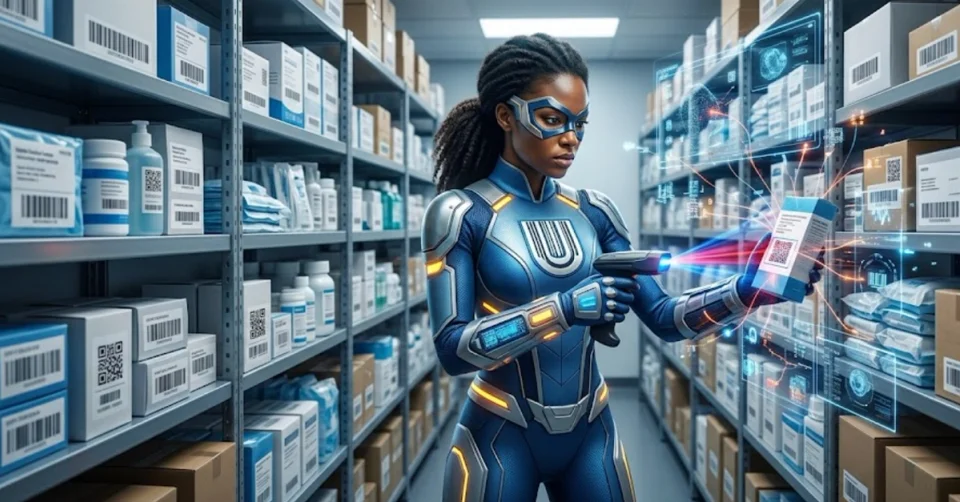
Why Understanding the UDI Compliance Is a Game-Changer for Medtech Teams
In today's regulatory landscape, UDI compliance has evolved from a simple labeling requirement into a high-stakes strategic imperative. As of February 2026, following the FDA’s full transition to the Quality Management System Regulation (QMSR), the Unique Device Identifier (UDI) is the central pillar of a compliant medical device enterprise. It is no longer just a "check-the-box" activity; it is a compliance superpower that fuels the digital thread of the modern medtech organization.
When managed effectively, UDI compliance provides a "source of truth" that bridges the gap between manufacturing, the supply chain, and the point of care. This guide explores how specialized roles within a medical device company can leverage UDI data to drive operational excellence and patient safety.
The Anatomy of Modern UDI Compliance
To master UDI compliance and tracking, one must first understand the data structure that regulators now demand. In 2026, a UDI is a composite of two vital data streams:
- Device Identifier (DI): The static portion that identifies the specific version or model of a device and the labeler.
- Production Identifier (PI): The dynamic portion that includes the lot or batch number, serial number, expiration date, and manufacturing date.
The global "alphabet soup" of databases—FDA’s GUDID, Europe’s EUDAMED (now mandatory for device registration as of May 2026), and China’s NMPA—requires these identifiers to be perfectly synchronized. Any discrepancy between your physical label and your digital entry can lead to market blocks or "misbranded" device charges.
1. Operations & Supply Chain: From Chaos to Control
For operations managers, UDI tracking is the ultimate tool for inventory hygiene. In an era of distributed manufacturing, knowing exactly where every unit sits in the global supply chain is a competitive necessity.
Operations FAQ
- Does every level of packaging need a UDI? Yes. Each level of device packaging must bear a UDI, except for the shipping container. If a box contains 10 individually wrapped units, both the inner unit and the outer box require unique identifiers.
- How do we handle "convenience kits"? Under FDA rules, a convenience kit (a group of devices packaged together for the user's convenience) must have its own UDI. However, individual devices within that kit may be exempt from labeling if they are not intended for individual sale.
2. Sales Representatives: The Service Superpower
Most sales reps initially view UDI compliance as an administrative burden. However, a rep who masters UDI data becomes an indispensable consultant to the hospital. When a hospital’s Electronic Health Record (EHR) system requires UDI data for a procedure, a prepared rep can provide that data instantly via mobile scanning.
Sales Rep FAQ
- What if a hospital's scanner can't read our UDI? This often indicates a "quiet zone" or print quality issue. Reps should report "failed scans" to Quality teams immediately to prevent billing delays and hospital frustration.
- Can I use UDI to manage my personal "trunk stock"? Absolutely. Sophisticated UDI management tools allow reps to scan their own inventory to see what is nearing expiration, preventing the risk of bringing an expired device into a live case.
3. Distributors: Bridging the Traceability Gap
Distributors are the vital link in the chain of medical device traceability. Regulators now hold distributors to higher standards regarding record-keeping. Using UDI data ensures the chain of custody remains unbroken from the factory to the hospital.
Distributor FAQ
- Are distributors responsible for GUDID or EUDAMED uploads? No. The "labeler" (usually the manufacturer) is responsible for data submission. However, distributors must ensure the devices they handle are properly labeled and maintain records of those UDIs for traceability.
- What should I do if a label is damaged during transit? A device with an unreadable UDI is technically non-compliant. Distributors should quarantine damaged items and request replacement labeling or a "Letter of Authorization" from the manufacturer before distribution.
4. Customer Service: Resolving Issues with Precision
When a clinician calls with a complaint, the UDI allows customer service teams to immediately pull the device's entire history—from the raw materials used to the date it left the warehouse.
Customer Service FAQ
- Can customer service verify if a device is part of a recall? Yes. By entering the UDI-DI and PI into the company database, service reps can provide an instant "Affected" or "Clear" status to the caller, significantly reducing hospital anxiety.
- Why is the date format on the UDI (YYYY-MM-DD) different from our local style? The YYYY-MM-DD format is the global standard required by the FDA and EU to prevent confusion between international markets (e.g., 03-04-2026 could be March 4th or April 3rd).
5. Compliance & Regulatory: The Guardians of Market Access
For compliance officers, UDI compliance is the foundation of the Quality Management System (QMS). Under the 2026 QMSR approach, inspectors trace UDI data from the "Design History File" all the way to "Post-Market Surveillance."
Compliance FAQ
- Is "Direct Marking" mandatory for all devices? No. Permanent marking on the device itself is generally required only for devices intended to be used more than once and intended to be reprocessed (cleaned/sterilized) between uses.
- What happens if we find a typo in our GUDID or EUDAMED submission? Corrections must be made immediately. In 2026, regulators view "data integrity" as a key component of product quality. Persistent errors can trigger FDA 483 observations or warning letters.
The Future: UDI and AI Integration
As we move through 2026, UDI tracking is becoming the data fuel for Artificial Intelligence. Companies are using AI to predict batch failures or supply chain bottlenecks based on UDI-linked data. By embracing a robust compliance management strategy today, you are building the data architecture required for the AI-driven medtech world of tomorrow.
Strategic Best Practices for 2026:
- Adopt a "Global First" Data Strategy: Harmonize US and EU data to avoid silos.
- Implement "Point-of-Use" Scanning: Move away from paper logs; the closer the scan is to the patient, the more accurate the data.
- Invest in Scannability Verification: Ensure barcodes meet ISO/IEC quality grades to avoid field failures.
Conclusion: Beyond Minimal Compliance
The transition from viewing UDI as a "requirement" to a "resource" is what separates market leaders from the rest. UDI compliance is the key to unlocking hidden efficiencies, empowering your sales force, and ensuring every patient receives a safe, traceable, and high-quality device.
Knowing how your devices are labeled and what UDI data they carry helps your customers avoid costly mistakes. And when your customers win, you win.
So what does this mean for you? Essentially UDI is here to stay and it benefits you to know enough to be dangerous with it. This doesn’t have to be painful, though. There are a plenty of resources out there to tell you what you need to know, and here is a great place to start.
If you’re interested in learning more about how Beacon can help your organization leverage UDI, schedule a conversation.
Brendan Sweeney
ConnectSx Team
Ready to streamline your operations?
See how Beacon can transform your medical device workflows.