Critical Operations Planning in MedTech: Is It Time to Rethink Your Sales, Inventory, and Operations Planning (SIOP) Strategy?
In the fast-paced and high-stakes world of medical devices, many teams find themselves stuck in reaction mode. A billing error here, a backordered implant there, a missing PO, a frantic drive across town to drop off a set that should’ve been available onsite. These moments pile up, creating stress, inefficiency, and a false sense that chaos is just part of the job.
But what if there were a structured, cross-functional way to address these issues proactively—and align your team for the next 12 to 24 months?
That’s where Sales, Inventory, and Operations Planning (SIOP) comes into play.
What Is SIOP?
SIOP, often referred to as Sales and Operations Planning (S&OP) with added emphasis on inventory management, is a structured, recurring operations planning process that aligns your sales forecasts, inventory levels, and supply chain capabilities to business objectives.
According to Plante Moran, it’s a form of collaborative planning that gives your organization a broader view of product line sales forecasts and inventory needs over a 12- to 24-month window.
In essence, SIOP is operations planning done right. It’s the roundtable conversation your organization needs—bringing together stakeholders from sales, marketing, operations, finance, and supply chain to look not just at what’s happening today, but what’s coming next.
Why You Need Ongoing Operations Planning—Not One-Time Fixes
We like to believe we’re good at solving problems as they arise. But how often do your departments sit down with a shared purpose: to diagnose operational friction, align on projections, and make intentional plans for the future?
Operations planning isn’t a one-and-done meeting—it’s a consistent practice. Whether you meet monthly, quarterly, or on another cadence, the goal is clear: create transparency across the business, align inventory and supply with actual demand, and keep operations running smoothly.
SIOP gives you the forum to address questions like:
- What pain points are slowing down our operations?
- Are our demand forecasts still realistic based on market conditions?
- What products are at risk of expiration or overstock?
- Is our supply pipeline stable and sized correctly for upcoming demand?
- Are new product launches on track?
- What process changes or capacity additions should we be planning for?
- Are all teams working from the same data?
This kind of integrated operations planning helps you transition from reaction mode to readiness mode.
The Core Elements of an Effective Operations Planning Process
A successful SIOP process typically includes:
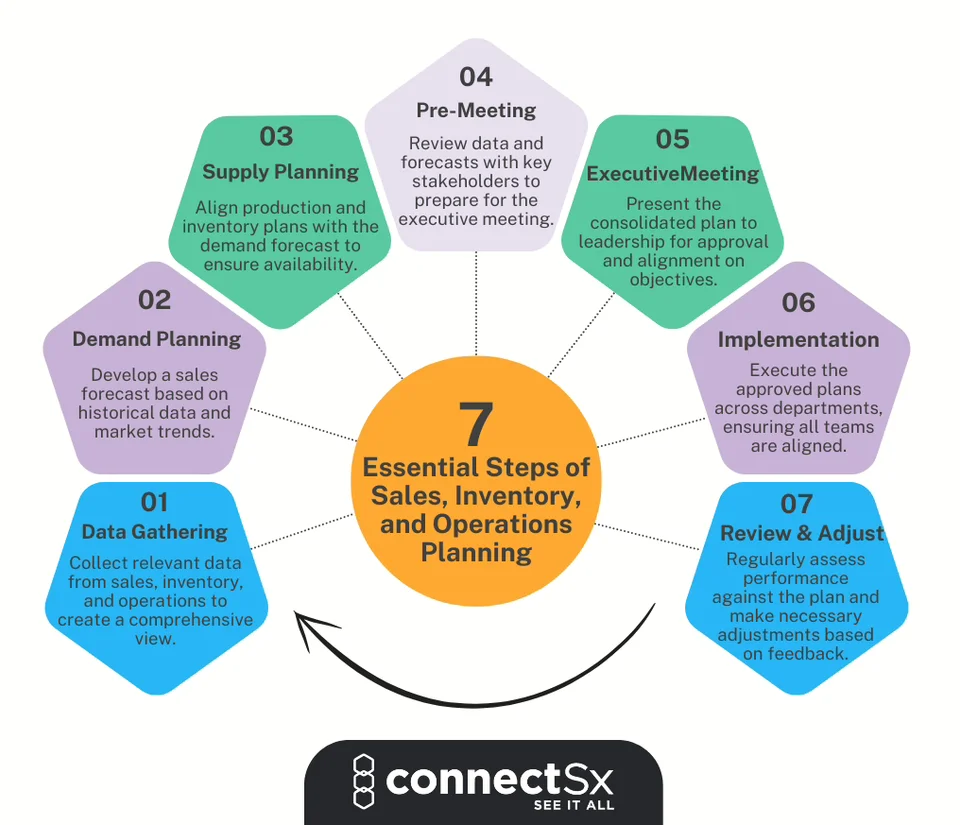
- Data Gathering – Consolidating key operational, sales, and inventory data so it can be digested and assessed by a cross-functional team. This requires access to timely data and the ability to report on it to produce helpful analytics and insights.
- Demand Planning – Generating a forecast based on historical trends and upcoming changes. Using the data gathered you may determine sales velocity, account for seasonal trends, and create a sales forecast to use to plan your purchases. The more granular you can get with your sales by salesperson, region, timeframe, etc. will influence the reliability of your forecast when you roll it up.
- Supply Planning – Matching production and distribution plans to expected demand. Using your data-driven forecast, create a plan for when you will purchase and/or build inventory. Consider lead times, cash flow, seasonal variability, and other pressures when creating your plan. What part of the year is your company tight on cash? Are there timeframes where it makes sense to build extra stock in case your forecast is wrong? Where do you see risk of building too much stock?
- Pre-SIOP Review – Internal collaboration to prepare for executive alignment. By now you should have a good idea of your historical performance, your expectations for the year, and your supply needs. Now start allocating resources and planning across your teams to align activity to these needs. Collaboration is key as understanding the departmental needs and lead times are critical to creating an effective plan. Also, understanding frustrations and pain points during this process can go a long way to reducing breakdowns, eliminating workarounds, and preserving morale.
- Executive SIOP Meeting – Presenting the consolidated plan for decision-making. Now that you have your collaborative plans created, be prepared to present them to leadership for decision-making. Present on rationale for your forecast, explanation of your supply needs and associated plans, and be prepared to discuss risks to your plans. Leadership may be in the position to add additional cushion where you kept supply tight or vice versa, depending on their perception of the need.
- Implementation – Executing the plan across departments. Create alignment across the organization as departmental leadership executes on the plans and agreed upon timelines. Establish regular cadences for meeting to ensure plans are on track.
- Review and Adjust – Tracking results, identifying gaps, and adapting plans. It is critical to monitor real-time performance and be prepared to pivot the plans if they do not match reality. The regular review cadence ensures these issues are surfaced early and can be responded to quickly. Track your plans performance vs. reality, understand how and why your plan is off so you can improve for the future. Bonus points if you included possible pivots and strategies for recovering should plans under or over-perform in your original presentation to leadership.
Each of these stages reinforces cross-functional alignment and operational clarity, which is exactly what most medtech companies struggle to maintain.
Where Beacon Fits Into the SIOP Picture
One of the biggest barriers to successful operations planning? Disconnected systems and siloed data.
That’s why Beacon is designed to give you the unified operational visibility needed to fuel better planning. It connects inventory management, case tracking, billing, and field sales activity into one cohesive platform—making real-time data accessible across teams.
With Beacon, you can:
- Pull accurate inventory data across all rep and distributor locations
- Forecast inventory needs based on actual case volumes and trends
- Identify bottlenecks, expirations, and slow-moving product in advance
- Monitor performance metrics tied to operational outcomes
- Ensure every team is working from the same source of truth
In short, Beacon helps medtech companies like yours operationalize their operations planning.
Final Thought
If you’re looking to reduce waste, avoid missed revenue, and position your team for success, Sales, Inventory, and Operations Planning isn’t just a good idea—it’s a competitive advantage.
And if you want your SIOP process to be more than just a spreadsheet exercise?Beacon is built to power that process.
Brendan Sweeney
ConnectSx Team
Ready to streamline your operations?
See how Beacon can transform your medical device workflows.