Knowledge Management: The Magic Bullet in Healthcare Innovation
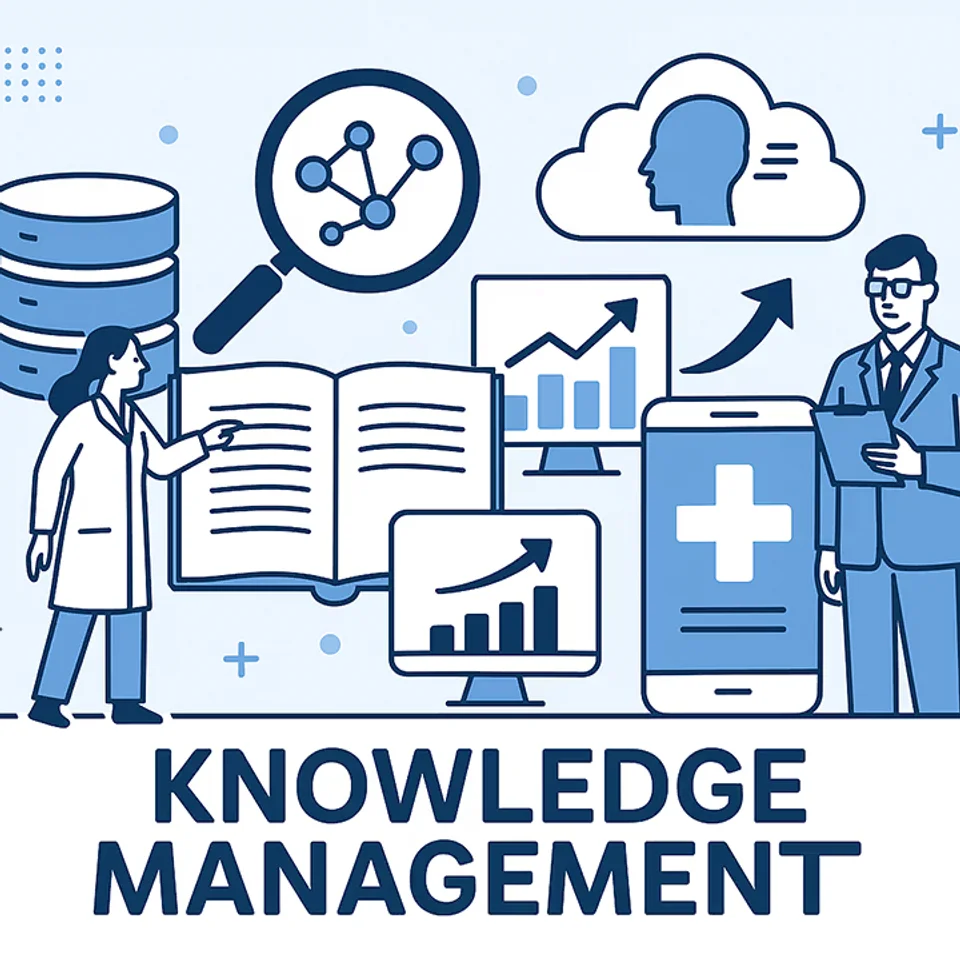
You’re missing on value without proper knowledge management
In the healthcare space, agents have increasingly focused on developing knowledge-sharing practices as a way to institutionalize best practices, leverage buying power through group purchasing organizations, and disseminate new research. These efforts are valuable, but the trajectory of innovation in healthcare is moving so quickly that it requires a more comprehensive and modern knowledge management paradigm.
With the shift toward value-based care, the sharing of knowledge has become central to delivering a successful patient experience. But this isn’t simply about passing information between providers and patients—it requires systems that can collect, store, prepare, and share knowledge in formats that are actionable and easy to digest.
Why Current Systems Fall Short
Today, both providers and manufacturers often rely on a patchwork of systems for managing their processes and data. These fragmented approaches lead to:
- Lost or inaccessible information
- Manual upkeep and inefficiency
- Data silos between departments or organizations
- Security gaps and compliance risks
This lack of effective knowledge management not only contributes to operational waste but also stalls innovation. Without structured systems for collecting, connecting, and distributing knowledge, organizations in the healthcare value chain will struggle to keep pace with the demands of modern care delivery.
A New Vision for Knowledge Management in Healthcare
The future of healthcare requires a broader approach to knowledge management—one that extends far beyond patient records or best-practice guidelines. A truly effective system must connect every link of the value chain, empowering each stakeholder with the insights they need to improve performance, reduce costs, and enhance patient outcomes.
A comprehensive healthcare knowledge management strategy should:
- Unify inventory data – Ensure visibility into inventory levels, locations, expirations, and usage.
- Support compliance – Track recalls, manage UDIs, and maintain auditable records.
- Facilitate education – Provide resources like surgical technique guides, training modules, and decision-support tools.
- Capture surgeon preferences – Store and share information to streamline case planning and reduce errors.
- Leverage sales and research content – Give teams fast access to relevant materials that strengthen customer relationships.
- Enable post-market surveillance – Collect data on product performance to drive innovation and safety.
By connecting manufacturers, distributors, sales reps, providers, payers, and educators, knowledge management becomes the foundation for collaboration and efficiency throughout the healthcare system.
Knowledge Management and Patient Outcomes
While knowledge management is often discussed in operational terms, its impact on patient care is profound. When information flows freely and securely across the healthcare ecosystem, providers are better equipped to:
- Make informed treatment decisions with real-time data
- Reduce waste and shortages that delay surgeries or compromise care
- Improve coordination across surgical teams, reps, and supply chain partners
- Empower patients with accurate and timely information about their care journey
In this way, knowledge management is not just a back-office necessity—it is directly implicated in designing for better patient outcomes.
Beacon as a Knowledge Management Platform
Beacon demonstrates how knowledge management can transform healthcare operations. More than an inventory or logistics solution, Beacon is designed to give stakeholders unprecedented access to their information. It turns raw data into actionable insights that support decision-making across the value chain.
With Beacon, organizations can:
- Track inventory and product movement in real time
- Access surgeon preferences and case data from a single platform
- Monitor expirations and recalls proactively
- Generate analytics that highlight inefficiencies or opportunities
- Share educational resources and sales content across distributed teams
In other words, Beacon doesn’t just help companies manage their assets—it helps them manage their knowledge. By breaking down silos, surfacing insights, and enabling collaboration, Beacon creates a feedback loop where every interaction adds value and drives continuous improvement.
The Future of Healthcare Depends on Knowledge
As healthcare systems adapt to new pressures—rising costs, stricter regulations, global supply chain disruptions—knowledge management will only grow in importance. Organizations that master it will gain a competitive edge, delivering care that is not only more efficient but also safer and more patient-centered.
Innovation in healthcare will no longer be limited to new devices or drugs. Increasingly, it will come from how well we collect, interpret, and apply knowledge across the entire value chain. Beacon is leading this shift, enabling companies to turn information into insight, and insight into action.
Knowledge management isn’t optional—it’s the foundation of the future of healthcare.
Knowledge is power, see how much you can save with operational improvement and integrated tools.
Beacon brings true knowledge management to the medical device industry by unifying data across the value chain. Instead of juggling fragmented systems, teams gain a single platform where inventory, surgeon preferences, case details, expirations, and recalls are all connected. Beacon transforms this data into actionable insights—helping manufacturers, distributors, and providers reduce waste, improve decision-making, and ultimately deliver better patient outcomes. By giving stakeholders access to the right information at the right time, Beacon makes knowledge management a driver of both operational excellence and healthcare innovation.
Brendan Sweeney
ConnectSx Team
Ready to streamline your operations?
See how Beacon can transform your medical device workflows.