4 Digital Health Trends: Looking Beyond the Consumer to Drive Value and Savings
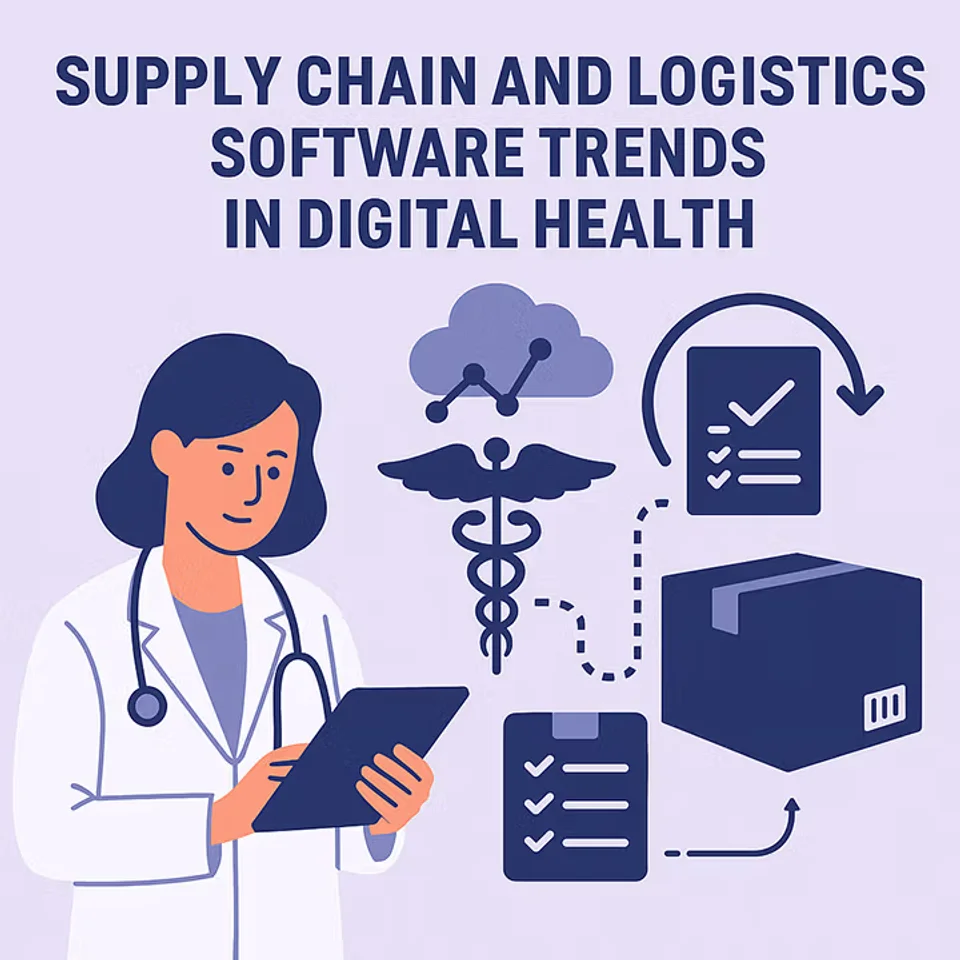
Digital health trends have become one of the hot topics in healthcare, with a focus on using accessible, digital tools to connect and empower patients and providers to improve healthcare delivery.
More recently, the definition for digital health been expanding beyond the focus of personal health monitoring, engagement, and changing the patient experience. These technologies have an impact on the individual healthcare experience, but this is only a fragment of the potential digital health landscape.
Rock Health describes digital health as, “the intersection of healthcare and technology; and not solely in medicine, but across healthcare, including wellness and administration.”(1) Many companies are looking beyond the personal experience, across healthcare to identify new opportunities to leverage technology to drive additional value.
Increasingly companies are collecting data around how healthcare is delivered and innovating on the processes that make care possible.
Some examples include optimizing operating room procedures, creating new experiences for medical training and continuing education, and improving logistics for healthcare supplies. Other areas getting attention are the collection, management, and interpretation of patient data in EHRs and improvements on interoperability within and between healthcare systems.
Digital tools focused on supporting the delivery of care are beginning to demonstrate how improving the underlying structures that make healthcare possible can reduce the cost of care and improve patient outcomes. Some of the most interesting opportunities include:
- Reducing errors through automation and digitization,
- Minimizing medical device waste through streamlined and accountable supply chains,
- Data analytics driving treatment decisions,
- Increasing the speed and efficiency of the OR through improved workflows,
- Upgrading provider training and access to training to improve the quality of care, and
- Freeing up providers’ time by creating integrated and user friendly software.
What we can’t quantify yet are the solutions and treatments that will be made possible by the wealth of uncollected and unanalyzed data in the value chain.
As the public and private sectors increasingly push for the modernization of healthcare, we will see many of these (currently) “behind the scenes” digital health technologies set the stage for the creation of a new type of health care system.
According to their Quora post, The University of Texas School of Biomedical Informatics believes that digital health will play a significant role in “curbing long term healthcare costs, enabling better healthcare outcomes, empowering both the patient and the healthcare provider with real-time data and connections with each other, and enabling the introduction of new contributors to the healthcare ecosystem.”
Perhaps unsurprisingly, we agree.
And while the advancements in personal digital health are key to improving individual outcomes, it is the supporting technologies that will drive systemic improvements in the healthcare system going forward, creating even more opportunity for innovation.
Logistics & Supply Chain: Where Digital Health Trends Create Hard ROI
The most overlooked digital health trends sit inside supply chain and logistics. Predictive demand planning, PAR-level automation, and UDI-driven traceability reduce stock-outs, expired inventory, and rush shipping.
Real-time visibility from manufacturer to distributor to point-of-use lets teams redeploy idle trunk stock, avoid emergency freight, and improve case readiness. In short: fewer fire drills, better margins, and safer care.
Action moves:
- Connect case schedules to inventory availability to cut last-minute shipments.
- Track lots/serials with UDI and surface digital health trends on expirations and due-backs.
- Use exception dashboards (e.g., “high risk of shortage in the next 14 days”) to trigger proactive transfers.
Interoperability & Data Governance: Trust the Data, Then Use It
Another cluster of digital health trends focuses on data liquidity: HL7/FHIR APIs, master data management, and event-driven architectures. These building blocks make supply, clinical, and financial systems talk to each other so insights actually flow to the frontline.
Action moves:
- Establish a single source of truth for product, pricing, UDI, and locations.
- Define data owners and SLAs; measure data freshness and error rates.
- Stand up a governance council to prioritize integrations that deliver clinician and patient value first.
Workforce Enablement: AI That Shrinks Admin, Not Autonomy
A practical wave of digital health trends is augmenting teams rather than replacing them. Think AI-assisted intake, auto-coding of bill-only sheets, OCR of packing slips, and copilots that suggest replenishment based on case history. The win is reclaimed time: fewer clicks for reps, less phone tag for OR coordinators, and faster cash for finance.
Action moves:
- Start with one repetitive workflow (e.g., reconciling case usage to inventory).
- Measure reclaimed hours, error reduction, and DSO impact to prove ROI.
- Train for “human-in-the-loop” oversight so algorithms remain accountable.
OR & Care-Pathway Optimization: Turning Minutes Into Outcomes
Hospitals are piloting digital health trends that compress OR setup and turnover: digital pick-lists tied to surgeon preference cards, scan-on-use for bill-only capture, and interactive checklists that reduce variability. Every minute saved compounds through the schedule—more cases started on time, fewer cancellations, and better device readiness.
Action moves:
- Digitize preference cards and connect them to live inventory availability.
- Use post-case analytics to flag variance (missing items, substitutions, late arrivals).
- Share insights with vendors and distributors to tune upstream kitting and loaner planning.
Measuring What Matters: A Simple KPI Set
To keep your transformation grounded, track a small set of metrics shaped by digital health trends:
- On-time case readiness (%)
- Emergency shipments as a share of total (%)
- Inventory turns & days on hand by category
- Expiration write-offs ($) and avoided write-offs ($)
- Time-to-bill from case end (hours)
- Data error rate in critical fields (UDI, lot, expiration)
The Bottom Line
Digital health trends aren’t just about consumer apps—they’re the operating system for modern care. The systems that move data, devices, and dollars across the value chain will determine who delivers safer care at lower cost. Make sure your business is changing with the times. Schedule a demo today!
Make sure your business is changing with the times, take our free readiness assessment or calculate your savings with our ROI Calculator.
(1) Gandhi, Malay. “What Digital Health Is (and Isn’t).” Rock Health. April 5, 2013. Accessed June 22, 2018. https://rockhealth.com/what-digital-health-is-and-isnt/.
(2)”Is Digital Health the Future of Healthcare?” Quora. March 14, 2018. Accessed June 22, 2018. https://www.quora.com/Is-digital-health-the-future-of-healthcare/answer/University-of-Texas-School-of-Biomedical-Informatics.
Brendan Sweeney
ConnectSx Team
Ready to streamline your operations?
See how Beacon can transform your medical device workflows.