Building Operational Capacity 1st: How CFOs Can Break Silos in Medtech
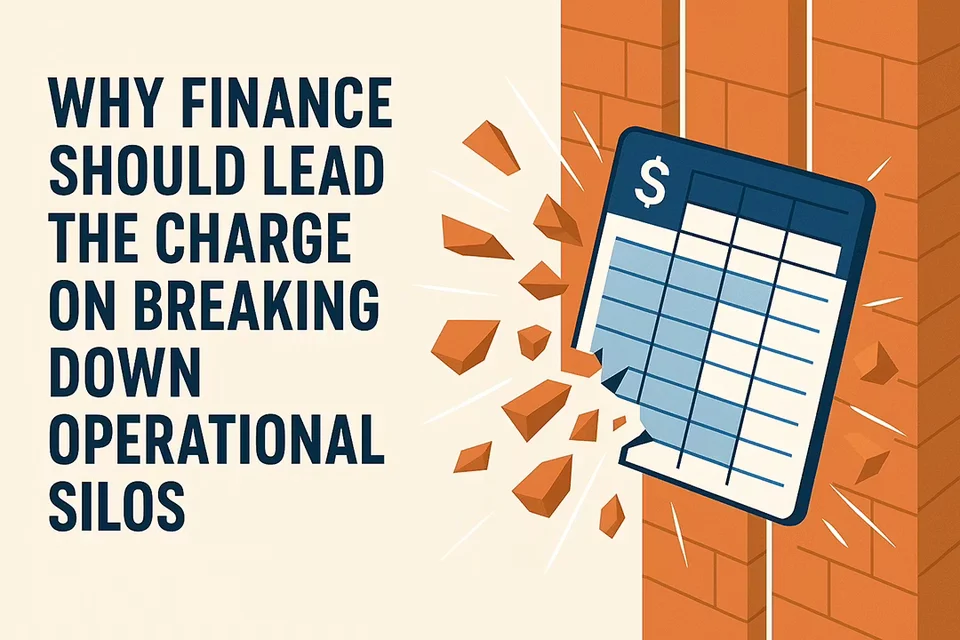
The medical device manufacturing world is fast-paced, complex, and demanding, and often building operational capacity is not front of mind. It’s easy for departments to become laser-focused on their own metrics and responsibilities. Sales needs to hit targets. Operations is battling backorders. Regulatory is managing compliance hurdles. And finance? Finance is left to make sense of it all—with spreadsheets, lagging reports, and unclear accountability for the drag caused by operational inefficiencies.
But what if finance didn’t just react to siloed operations—what if it led the charge to eliminate them and build sustainable operational capacity?
Siloed Operations: A Hidden Cost Driver
Every CFO understands the visible costs of inefficiency: delayed shipments, unused inventory, missed revenue. But operational silos introduce hidden costs that erode operational capacity and compound over time:
- Inventory discrepancies caused by poor coordination between supply chain, field reps, and warehousing. Inaccurate inventory reporting limits operational capacity by distorting tax filings, access to credit, and company valuation.
- Inaccurate forecasting when sales, operations, and finance aren’t aligned. This can drive unnecessary ordering, create out-of-stocks, and tie up working capital. The lack of a unified demand picture directly restricts a company’s operational capacity to respond to market needs.
- Overproduction of SKUs while high-demand items remain out of stock. Misaligned planning reduces the capacity to serve the right markets at the right time. Instead of fueling growth, it clogs warehouses and wastes space.
- Duplicate software and disconnected systems where each department runs its own tools. Competing sources of truth don’t just slow decision-making—they sap operational capacity by forcing teams to reconcile numbers that never lined up in the first place.
The result? Finance ends up playing referee, trying to reconcile numbers that were never on the same field to begin with.
Why Finance is Uniquely Positioned to Build Operational Capacity
While it may seem like an operational or executive problem, breaking down silos starts with visibility—and no one has better visibility into the numbers than finance.
Finance teams already touch every part of the organization through budgeting, capital planning, ROI modeling, and performance analysis. You see the symptoms of silos every month when the numbers don’t add up. But you also have the authority and objectivity to ask the hard questions that directly impact operational capacity:
- Why are we carrying $2M in unused consignment inventory?
- Why are case billing delays spiking in certain regions?
- Why is our forecasting model constantly overshooting actual demand?
These aren’t just operational questions. They’re strategic ones—and finance has the data to illuminate where operational capacity is being wasted or underutilized.
Practical Ways Finance Can Lead the Effort
- Champion Cross-Functional PlanningDrive a formal Sales, Inventory & Operations Planning (SIOP) process where finance plays a central role—not just as a reporter of outcomes, but as a facilitator of accountability. This strengthens collaboration and expands operational capacity.
- Insist on System IntegrationPush for unified platforms or integrations that connect ERP, CRM, inventory, and case tracking systems. Fragmented tools feed silos. Connected data builds alignment—and improves operational capacity across the organization. (cough cough, Beacon, cough book a demo).
- Demand Outcome-Based KPIsEncourage teams to align on shared metrics—like case completion-to-payment cycle time, forecast accuracy, or inventory turns—that reflect collective performance and available operational capacity.
- Use Financial Models to Drive BehaviorModel out the cost of inaction: What’s the monthly revenue loss from case billing delays? What’s the holding cost of excess field inventory? Numbers highlight where operational capacity is bottlenecked and show teams the payoff of real change.
- Advocate for Operational ClaritySupport investments in process mapping, training, or technology that simplify cross-team workflows. Confusion about roles drains operational capacity. Clarity builds it.
The Strategic Payoff
When silos are broken, finance doesn’t just get better numbers. The entire organization expands its operational capacity and becomes more agile and resilient:
- Field reps have the right products where and when they need them.
- Regulatory submissions move faster because data is accurate and accessible.
- Cash flow improves as case-to-cash cycles shorten.
- Strategic planning becomes proactive instead of reactive.
And you, the CFO, move from being the bearer of bad news to a true architect of operational capacity and organizational transformation.
Closing Thought:
In medtech, where precision matters and the stakes are high, alignment isn’t a luxury—it’s a necessity. The companies that thrive in the next decade will be the ones that break down the walls between departments and build a foundation of shared visibility and accountability. Finance is uniquely positioned to intervene in the operational landscape, can solely see the complete financial burden of inaction, and holds the keys to the coffers to determine what will have the best ROI.
Finance can—and should—be the first team to pick up the hammer.
Brendan Sweeney
ConnectSx Team
Ready to streamline your operations?
See how Beacon can transform your medical device workflows.